
From Siblings to Cousins: What to Agree on Before the Next Generation Takes Over

Two siblings may have spent decades learning how to run a business together. They know which decisions to discuss, which disagreements to leave alone, and when to give each other room. As their children grow up, it can be tempting to assume those cousins will inherit the same understanding along with the company.
Cousin succession planning involves a different set of expectations. The cousins may have different interests and experience, and each may have heard a different account of how the business works. Before deciding who takes over, the current owners need to establish what the next generation is being asked to join. That includes meaningful work, ownership expectations, decision-making authority, and a way to disagree without turning every business issue into a dispute between branches of the family.
Find out what the cousins actually want
A parent’s hope that a child will lead the business is understandable. It is still different from the child’s own interest in the role. Start by asking each potential successor what kind of work they want to do, what they understand about the company, and what concerns them about joining it.
Leave room for answers that do not fit the expected plan. One cousin may want an operating role, another may prefer a career elsewhere, and a third may be interested but need more experience. Those differences are useful information. Pressure to sound committed can hide the very questions the family needs to answer.
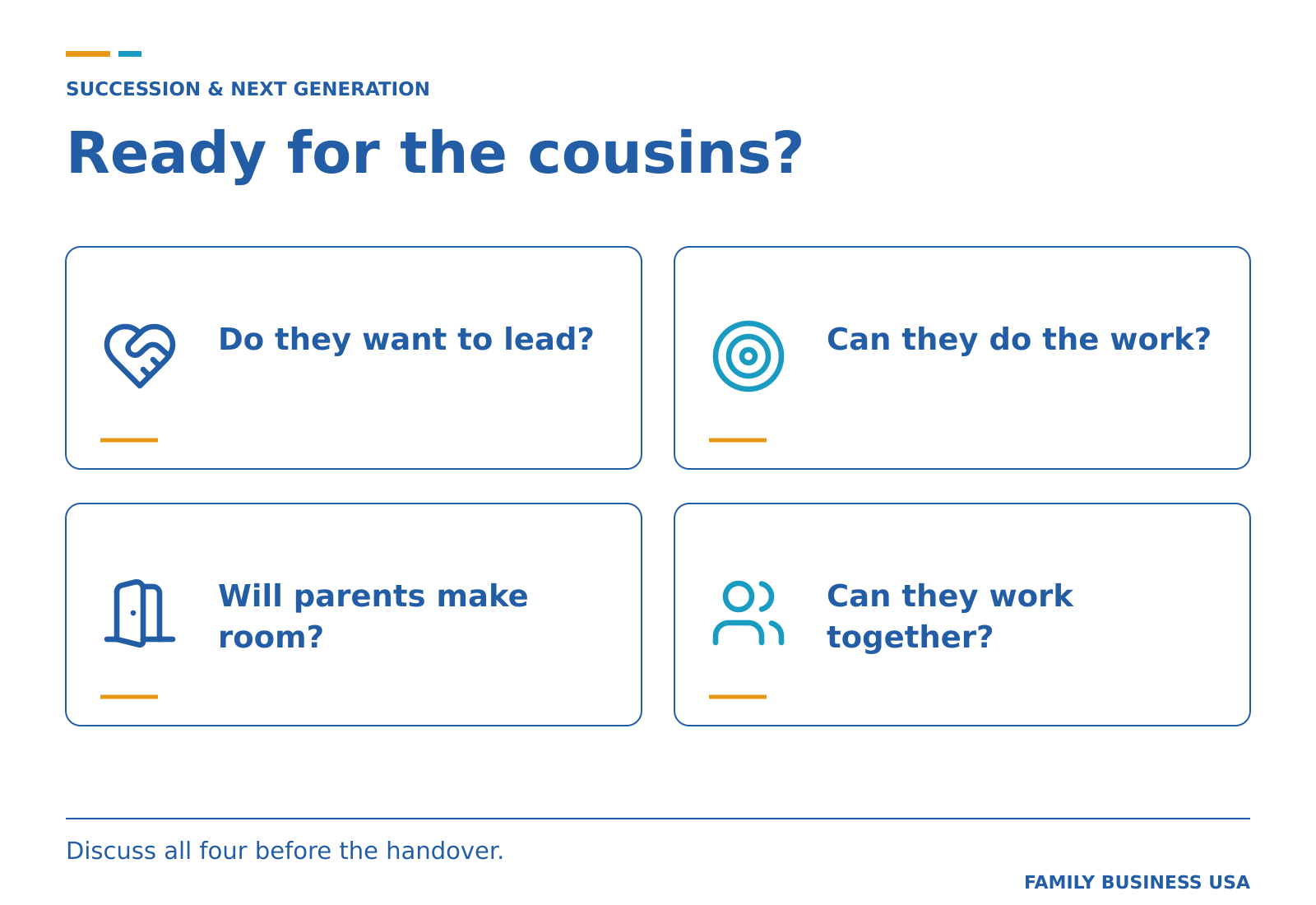
The work starts with interest and potential ability, then asks whether the current generation can make room and whether future leaders can work together. Our leadership development service addresses preparation for actual responsibilities, rather than assuming that growing up around the company establishes readiness.
Write the leadership role before choosing the family member
When each sibling begins by advocating for their own child, choosing a successor can become a comparison of family branches. It is more useful to define what the company will need from its future leadership before attaching names to positions.
Consider the work ahead: managing employees, understanding financial results, making operational decisions, maintaining important relationships, and responding when something goes wrong. Decide which responsibilities belong in one leadership role and which belong elsewhere. A strong salesperson, technical specialist, or financial manager may make a valuable contribution without being the right person to lead the whole company.
Now compare each person’s demonstrated abilities with those requirements. Identify the experience still needed and create opportunities to develop it. Our existing article on identifying leadership potential provides broader background; the particular challenge here is agreeing on one set of expectations across family branches.
Shared leadership may be possible, but it needs an explanation of how decisions will be made when the leaders disagree. Giving both cousins an impressive title does not answer that question.
Separate a leadership opportunity from an ownership promise
Families can unintentionally make several promises at once. An invitation to work in the business may be heard as a guarantee of future leadership, equal pay, or a particular ownership share. When those expectations remain unspoken, people can spend years preparing for different futures.
Discuss employment, leadership, and ownership separately. Someone may become a capable employee without becoming the next chief executive. A family member may be an owner while pursuing a career elsewhere. Another may lead day-to-day operations without holding the same ownership interest as other relatives.
The IFC Family Business Governance Handbook distinguishes the founder, sibling partnership, and cousin stages and examines the overlapping roles family members hold. That is useful background for understanding why the cousins’ situation may need clearer arrangements than the siblings relied on.
The family’s ownership alignment work should address what ownership means, how information is shared, and which questions require professional review. Avoid making informal assurances about shares or control that have not been worked through with the relevant owners and advisors.
Let the cousins work together before asking them to lead together
Getting along at family gatherings is a useful starting point, but it does not show how people will handle a missed deadline, an unpopular decision, or disappointing results. Future leaders need opportunities to work together under real expectations while the current generation can still support their development.
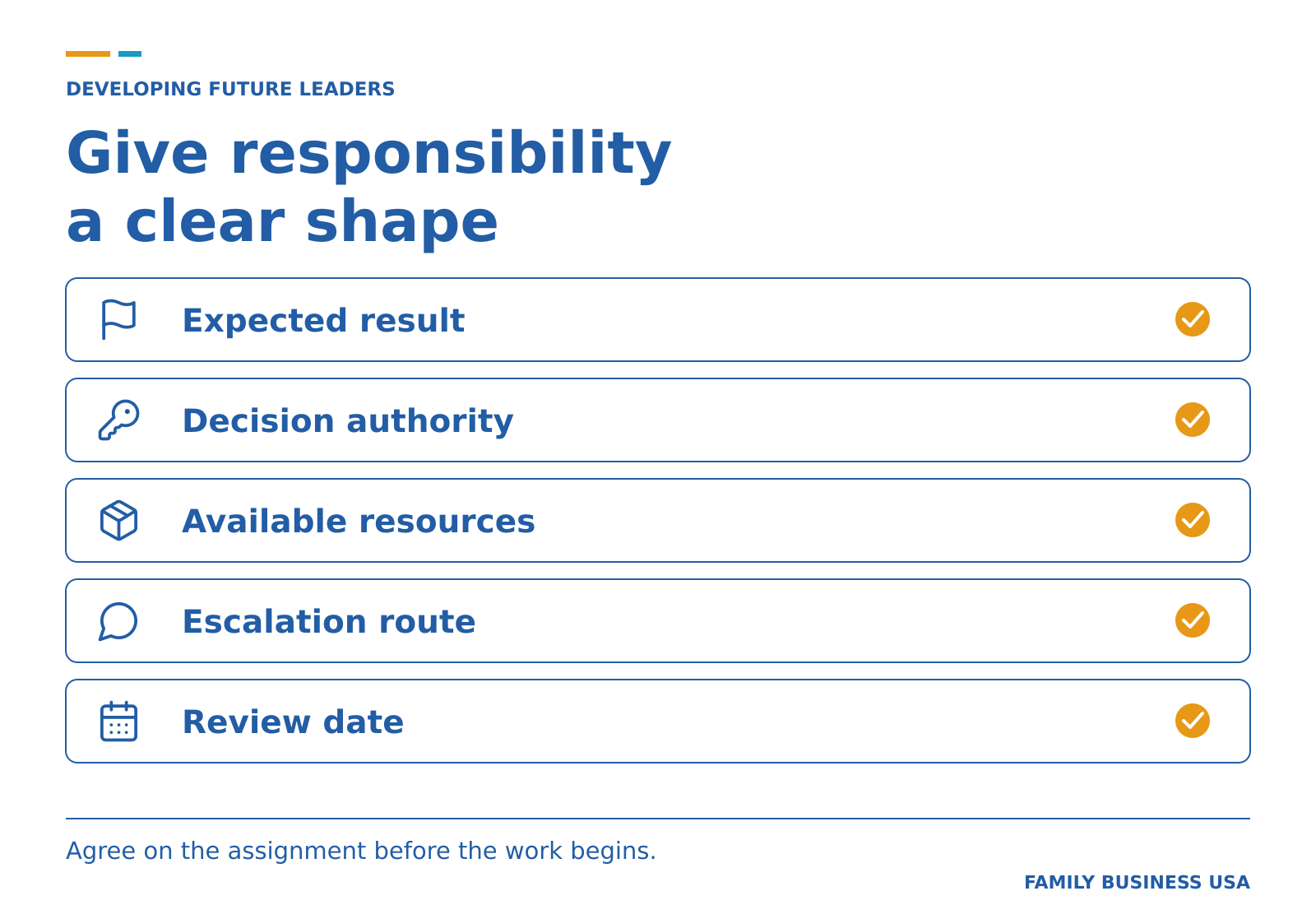
For example, in a hypothetical company, one cousin might lead a defined operational project while another manages its customer-facing component. Before the work begins, agree on the result, each person’s authority, the resources available, and how problems should be raised. Review the work against those expectations, including how the cousins communicated when their priorities differed.
This is an opportunity to learn, rather than a competition designed to prove which parent’s child is better. If one person needs more development, identify the gap and the next responsibility that will help address it. If they do not want to work together, find that out before making the company’s future depend on their partnership.
Current leaders also have work to do. The cousins cannot learn to resolve disagreements if every uncomfortable decision is immediately returned to their parents.
Agree on how parents will respond when a cousin complains
In a sibling-run business, a parent may also be an owner, supervisor, and trusted confidant. That combination becomes complicated when the next generation uses separate conversations with parents to revisit decisions made at work.
The siblings should agree on a consistent response. Hear the concern, establish whether it involves a genuine safety, conduct, or other serious issue, and direct ordinary work disagreements through the agreed management process. Sensitive concerns need an appropriate reporting route; a clear chain of authority should never prevent someone from raising misconduct.
For ordinary disagreements, avoid quietly reversing the other branch’s decisions or carrying messages between cousins. If a decision needs review, make the review visible to the people responsible. Otherwise, the cousins learn that influence through a parent matters more than responsibility at work.
Our article on sibling conflict in family businesses explains the broader relationship pressures. The additional task during a cousin transition is preventing those pressures from becoming the next generation’s decision-making system.
Record what is agreed and what remains unresolved
A useful transition discussion should end with more than an intention to keep talking. Record the future roles under consideration, development responsibilities, decision authority, ownership questions, and the next review date. Give each unresolved question an owner and a next step.
The family does not need to settle everything in one meeting. It does need a shared understanding of which decisions have been made and which remain open. As the cousins gain experience, revisit the plan against what they have demonstrated and what the business now needs.
This work connects directly to family business succession planning. Preparing individual successors, preparing current leaders to step back, and building cooperation among future owners are related responsibilities. Progress in one area cannot substitute for ignoring another.
Frequently Asked Questions
Should every family branch have a leadership position?
A leadership position should serve a real business need and have clear responsibilities. Representing different branches in family discussions is a separate question. Creating unnecessary management jobs to balance representation can leave the business with unclear accountability.
Can cousins own equal shares while one leads the business?
That can be a possible arrangement, but the family needs clear expectations about management authority, ownership decisions, information, and compensation. The governing structure and agreements need appropriate legal and accounting review. Equal ownership alone does not explain how daily work will be managed.
What if one cousin is interested but not ready?
Identify the specific gap and give the person a development opportunity suited to it. Agree on responsibilities, support, and how progress will be reviewed. Avoid promising a leadership role on a fixed date regardless of what the person demonstrates.
When should sibling owners start this conversation?
Begin before expectations harden around particular jobs or ownership outcomes. The right level of detail depends on the cousins’ ages, interests, and involvement. Early conversations can establish principles; later discussions can address roles and decisions as the situation becomes clearer.
If your family is preparing for a transition involving siblings and cousins, schedule a confidential consultation to discuss the people, responsibilities, and agreements that need attention.
About the author
Henry Hutcheson is the founder of Family Business USA and author of Dirty Little Secrets of Family Business: Ensuring Success from One Generation to the Next. Since 2007, he has helped family-owned businesses navigate succession, leadership, ownership, and conflict. Drawing on his own family-business background, Henry helps families build stronger businesses, preserve their wealth, and maintain family harmony.
Sources
Henry Hutcheson. Dirty Little Secrets of Family Business: Ensuring Success from One Generation to the Next (3rd edition). Perspective on next-generation readiness, current leaders stepping back, and future leaders working together.
International Finance Corporation: Family Business Governance Handbook. Background on the evolution from founder to sibling and cousin ownership, family roles, and governance.